
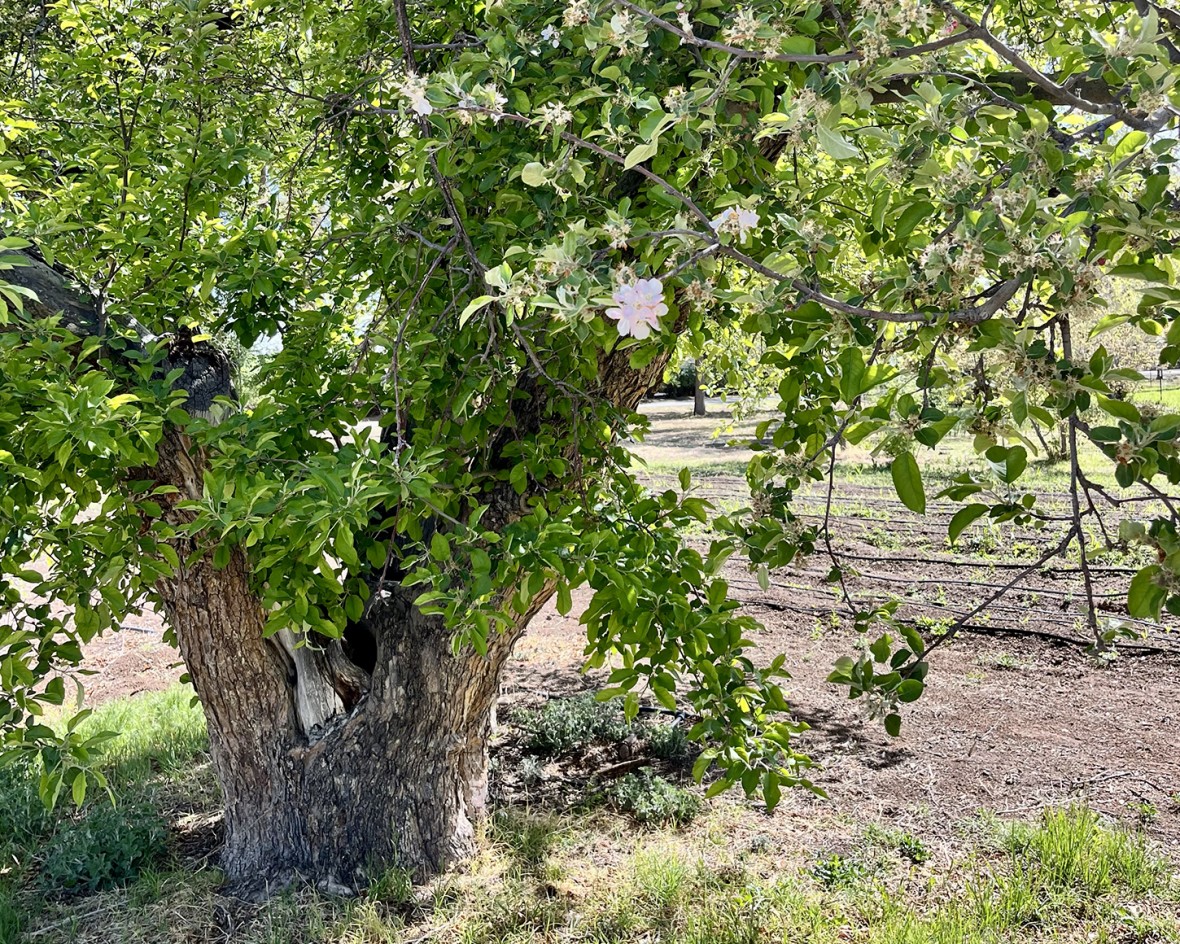
The DNA results are in, and our oldest fruit tree has a name. She is a Black Twig apple, a variety that dates to the 1830s, discovered as a chance seedling on a Tennessee farm. It is a tart apple, excellent for fresh eating, cider and baking, and one that grows sweeter with time in storage. Today it is considered a rare specialty variety, largely edged out of commercial production by modern cultivars. To have one standing here, planted likely during the Simms era of the 1930s, is something worth marking.
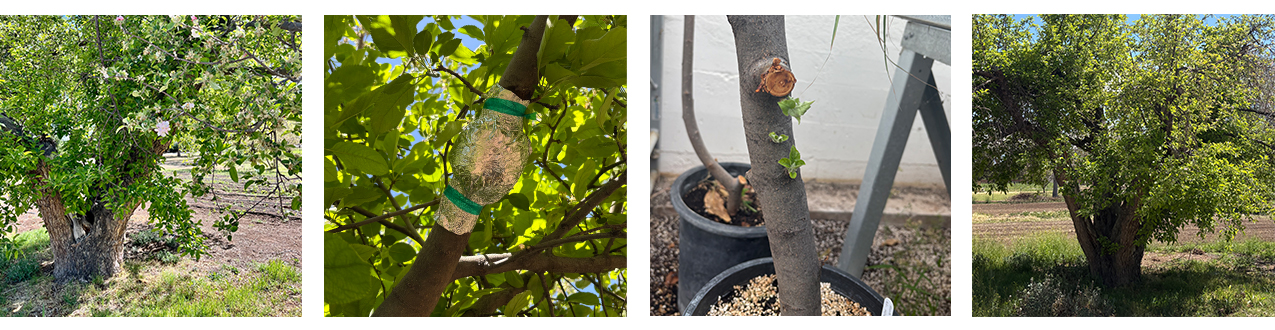
And now, her story is continuing. Last spring, our farm team began the process of air-layering this tree. This delicate propagation method encourages roots to form on a branch while still attached to the tree, receiving water and nutrients, and creating genetically identical clones of the parent plant. Rooted branches were transplanted into the greenhouse in the fall, and are now ready for planting on the farm, so future generations can enjoy the tart flavor of Black Twig apples.
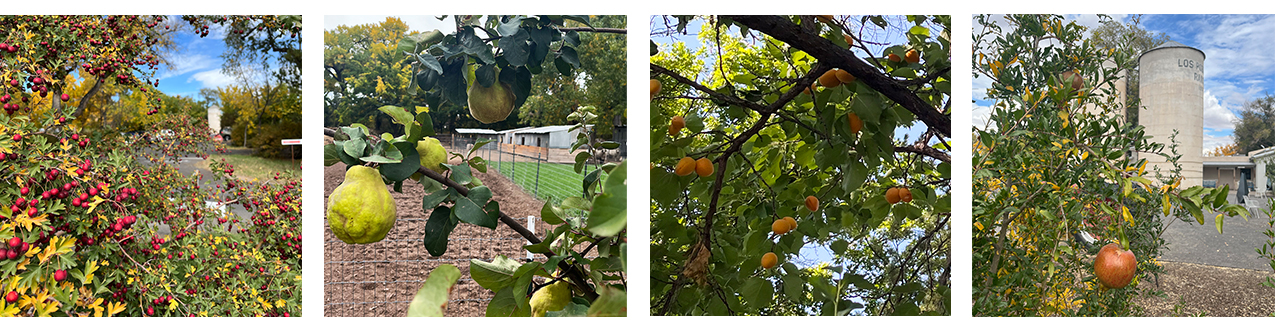
Our Farm Manager Judy put it simply when the DNA results came in: this information can really help in how we care for the tree going forward, and can hopefully be helpful to the kitchen too. That connection between tree and table is already well established at Los Poblanos. The farm harvests heirloom apples alongside apricots, cherries, mulberries, figs, pomegranates, persimmons, plums and jujubes that grow throughout the grounds. The small orchard of peaches and pears on the east side of the property, near the alpaca and sheep pen, is part of a larger edible landscape that has been feeding this place for generations.
The tallest trees on the farm are essential to this region’s landscape. Los Poblanos sits within the Rio Grande Bosque, part of what is considered the largest cottonwood forest in the world. The Valley cottonwood is a keystone species here, building towering canopies that cool the air and create layered habitat for wildlife throughout the watershed. Our iconic driveway allée of mature cottonwoods and Siberian elms has greeted visitors for decades, a living procession rooted in place. These trees have been sustained by the acequia system, a centuries-old tradition of flood irrigation that moves water through hand-dug channels the same way it always has.
That continuity is the thread running through everything at Los Poblanos. The acequias feed the cottonwoods. The orchard carries the memory of a farm planted in the 1930s. And one old apple tree, now identified, propagated and full of new growth, connects this Arbor Day to every one that came before it.
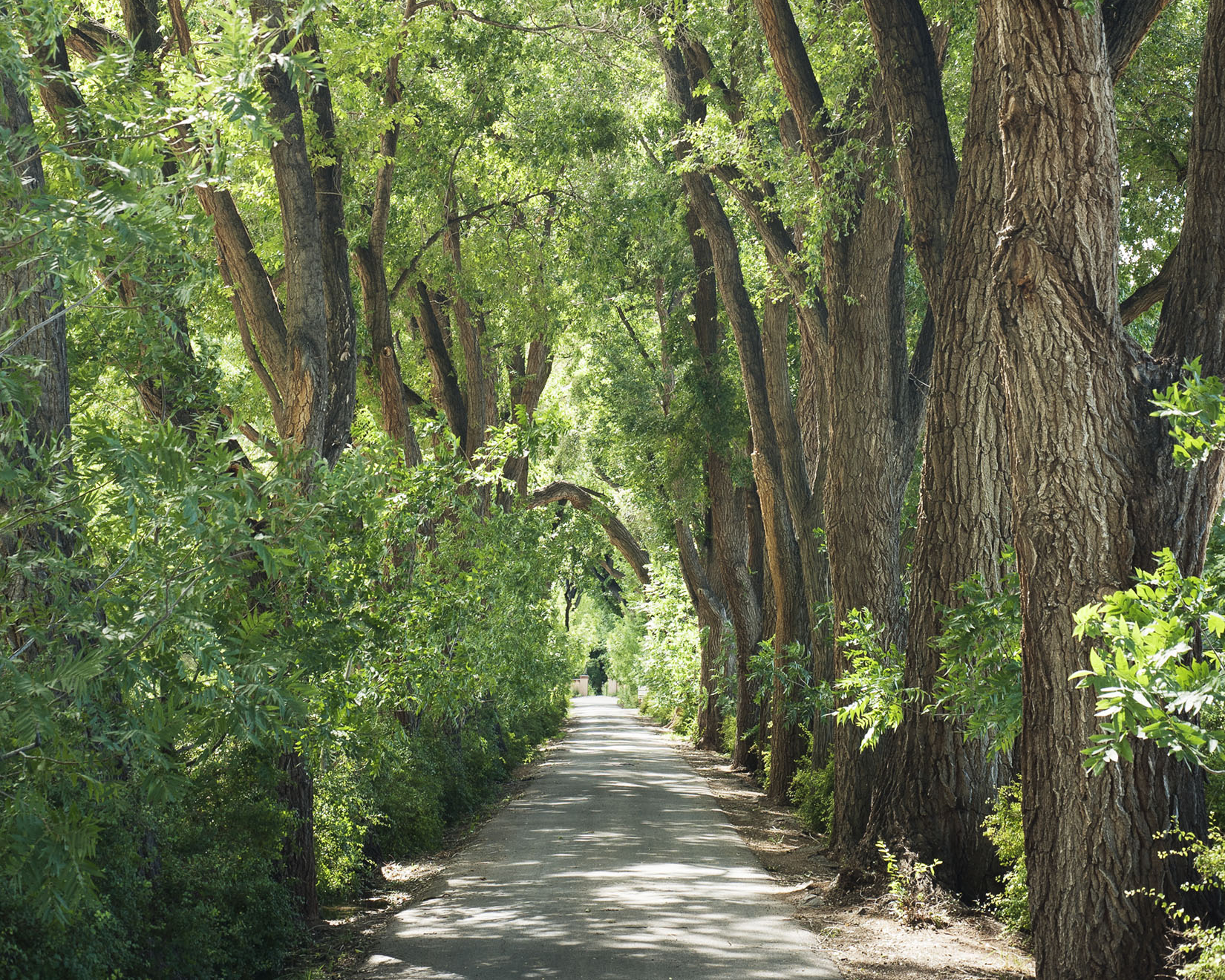
Driveway photo by Matthew Williams