
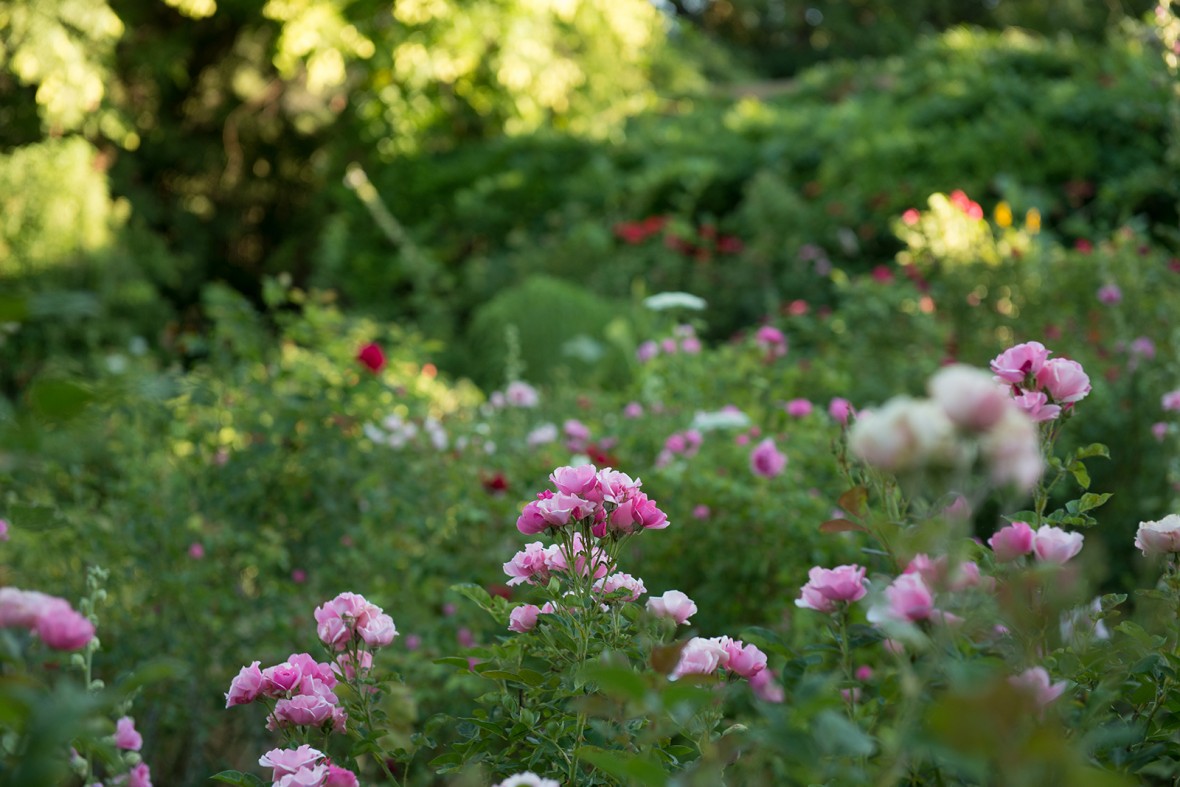
Roses of every color, scent and shape are one of the most beautiful markers of spring at Los Poblanos. From the historic Rose Greely Garden with its abundant beds, to the climbing roses, formal plantings and looser heirloom varieties that surround La Quinta and wind throughout the property, we anticipate their blooms all year.
Behind that display is careful early spring rose care.
This year, we are expanding our collection with nearly 170 new rose plants, each selected for climate suitability, fragrance and visual character. While their beauty defines the season, their purpose extends well beyond the garden. We harvest and dehydrate petals for our culinary team’s house-made herb blend, incorporate them into our Rose Cocktail rimming sugar and distill rose water for the bakery’s seasonal pastries and confections.
When to Prune Roses in Early Spring
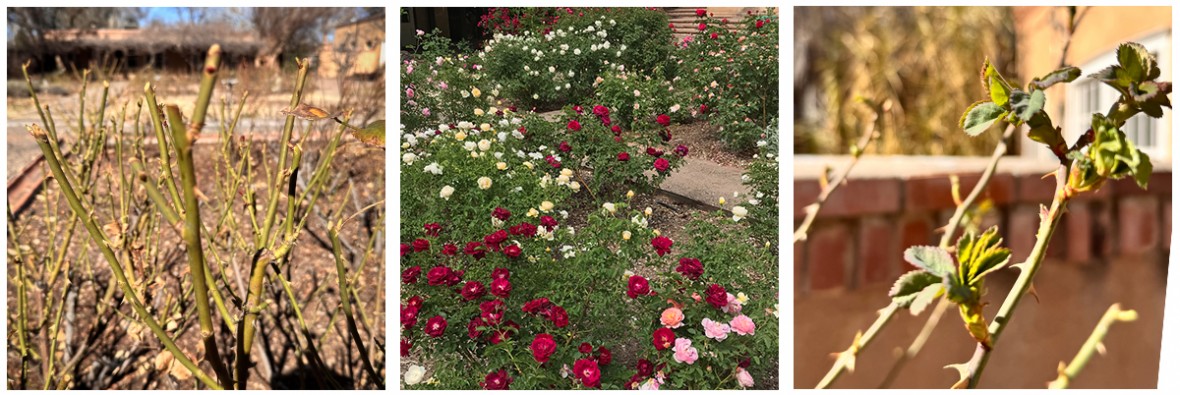
With higher than average temperatures and our careful calibration to time maximum blossoms around Mother’s Day, our team began pruning and fertilizing in mid-February. Depending on your climate, March is often an ideal time to prune and feed roses. As a general guideline, expect about three months between pruning and peak spring bloom.
A reliable signal that it is time to prune roses in early spring is the appearance of new leaf buds along the stems. Once you see fresh growth beginning to form, the plant is ready. Pruning at this stage helps stimulate vigorous new growth, improve airflow and support overall plant health.
How to Prune Roses for Healthy Growth
Our Garden and Landscape Manager, Maxfield Bervig, recommends starting with sharp, clean pruning tools. Make each cut at a 45 degree angle to prevent water from settling on the stem, which can weaken the plant’s natural defenses against disease.
Begin by removing any dead or damaged branches. Next, eliminate stems that cross or rub against each other, as these can create wounds and restrict airflow. Finally, shape the plant to maintain an open structure that allows light and air to circulate freely.
Thoughtful pruning in early spring sets the foundation for strong stems, balanced growth and abundant blooms in the weeks ahead.
When and How to Fertilize Roses
Feeding is another essential part of early spring rose care. March is typically an ideal time to apply a slow-release fertilizer. As new growth begins, steady nutrients support vibrant foliage and encourage full, fragrant blossoms.
Fertilizing at the right moment ensures the plant has consistent nourishment as it directs energy into developing buds and flowers.
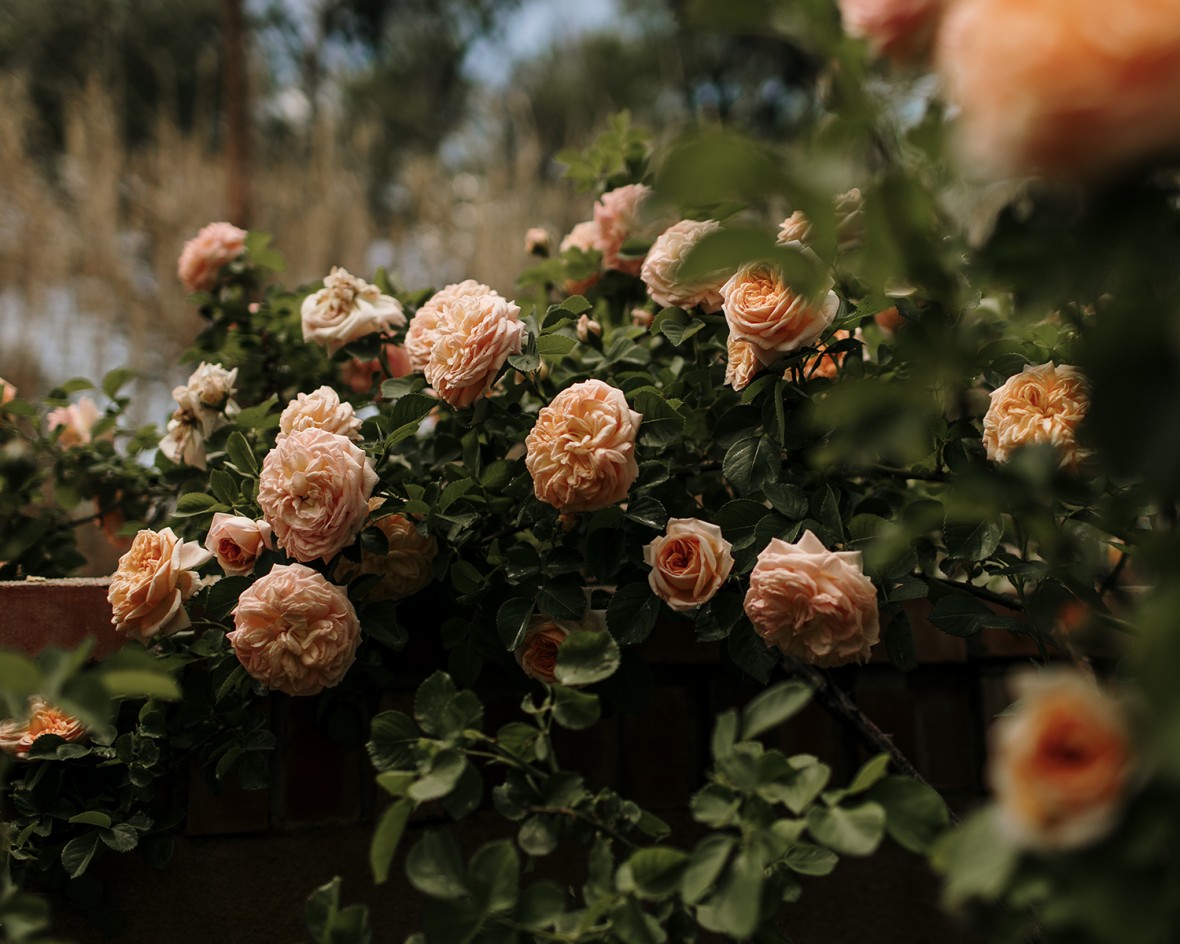
With careful pruning and timely feeding, roses reward the effort. Whether climbing along a sun-warmed wall or blooming in a formal garden bed, early spring care ensures a season filled with color, fragrance and beauty.
Final photo by Elizabeth Wells