
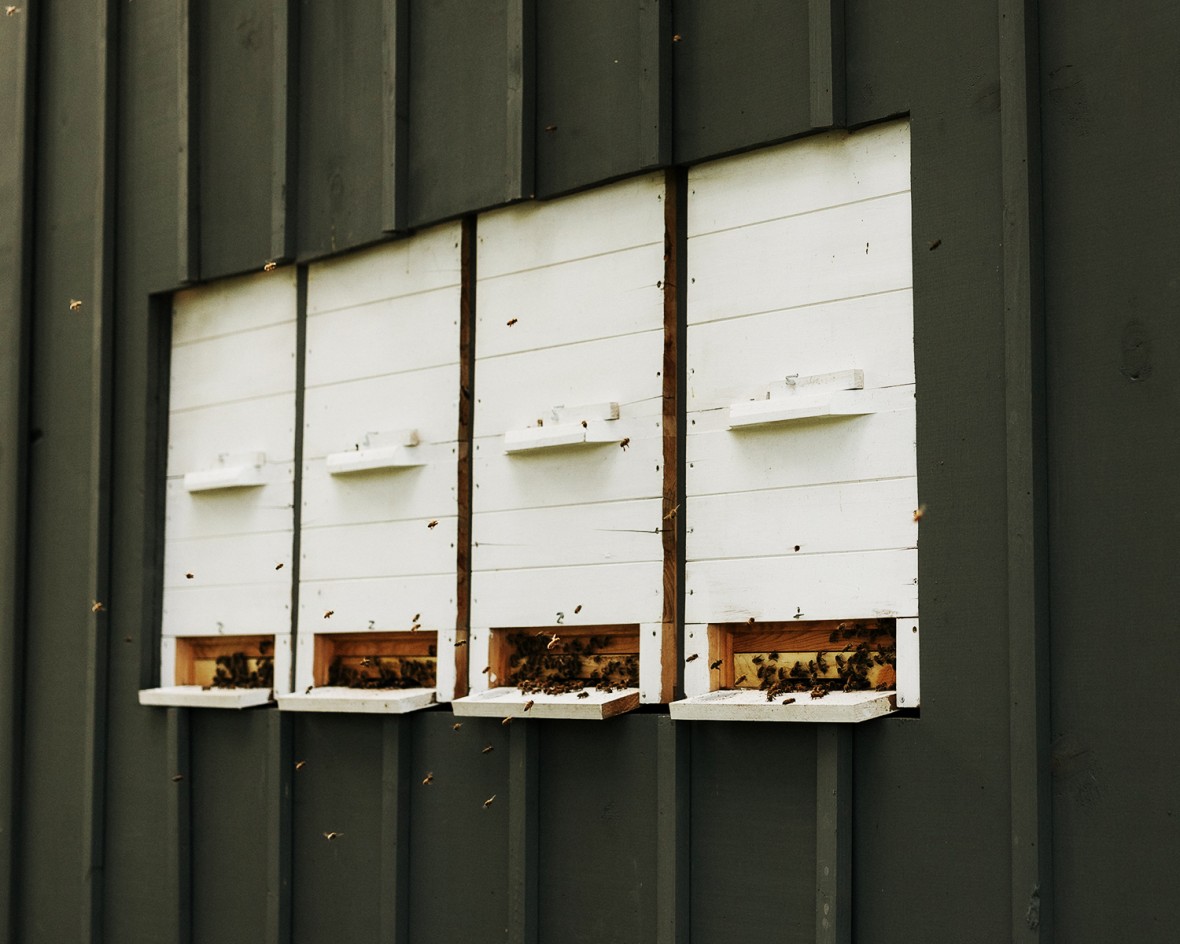
In early spring, we watch the hives wake up as fruit trees blossom and daffodils emerge from the soil. As early flowers offer their first pollen, worker bees venture out on warmer afternoons, a welcome sight after months of winter quiet.
UPDATE FROM THE HIVES
"Four of six of our hives survived the winter and are starting to carry in pollen," says resident beekeeper Lara Lovell. Our losses were less this year, which means we have not had to buy new bees and are working from our own proven genetics.
Brood patterns are filling out, populations are building and the energy inside each hive is rising. "Queens have been laying their brood patterns since late winter," Lara notes, "so some hives may be starting to swarm." As colonies grow stronger and space grows tighter, bees prepare to split the hive in one of nature's most dramatic spring events. Crab apple trees across the farm are loud with buzzing activity," Lara adds, a wonderful sign of what the season ahead holds.
This year, Lara is raising queens for the first time, one of the most delicate and skillful parts of beekeeping. Colonies need a new queen when the existing one dies, fails or becomes less productive, but beekeepers also raise them intentionally to split hives, prevent swarming or breed for desirable traits like gentleness, productivity or disease resistance. In this process, timing is everything. Temperature, colony strength and the availability of nurse bees all affect the outcome. If all goes well, she will be able to distribute queens with other beekeepers in the neighborhood to help build a resilient local pollinator community.
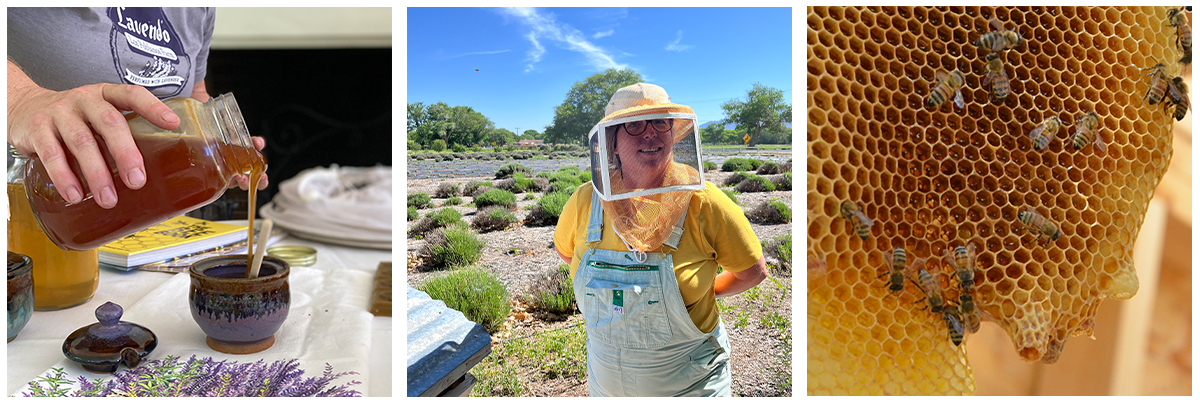
The honey we harvest on the farm enhances special guest expeirences on a seasonal basis, and may appear at the Chef's Table, Afternoon Tea or even woven into treatments at the Hacienda Spa. We also work with a network of beekeepers across the state to distribute raw New Mexico honey in our retail shops and online. Every purchase supports this vibrant ecosystem and brings the flavors of the Rio Grande Valley to your table.
Lara Lovell has cared for the hives for a little over seven years. In that time her role on the farm has grown well beyond beekeeping. She now also distills essential oils, tends the greenhouse, harvests and processes herbs for the gin and wholesale products and helps lead farm tours year-round.
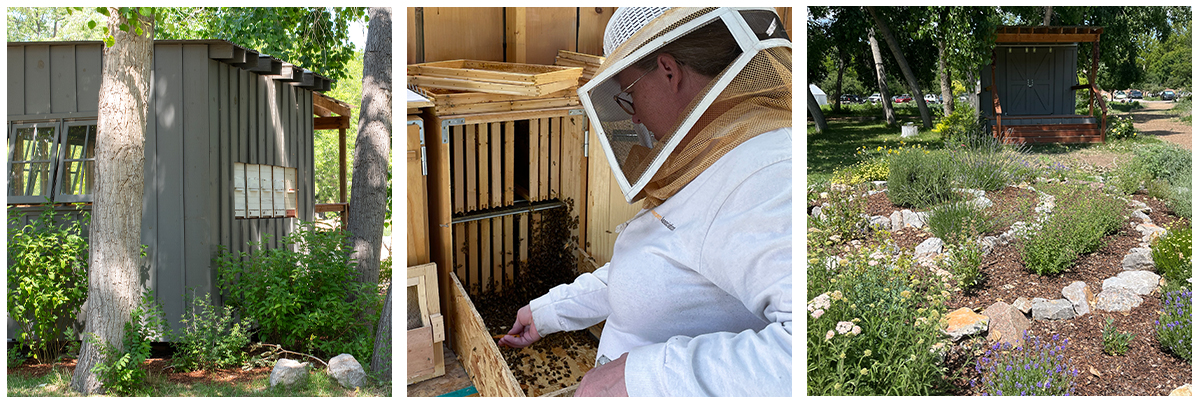
Teaching has always been central to how she works. During summer months she hosts Meet the Beekeeper tours for Inn guests on a drop-in basis. A few years ago she converted one of the AZ hives into what she calls a classroom in a box, filling it with photographs and bee details and adding to it each season. An observation window looks into a honeycomb of live bees, which visitors inspect with a magnifying glass. Her teaching extends outside the farm too: she facilitates the Certified Beekeeper program through the NM Beekeepers Association and serves as the organization's President.
Beyond the farm
The pollinator patch near the bee house is more than a garden. Lara has shared pollen samples with researchers at New Mexico State University and will this year contribute to a National Pollen Database being developed by Oregon State University, one that will be accessible to researchers and the public alike.
Beyond that, Lara has submitted a letter of intent to the One Hive Foundation for a grant that would fund the creation of pollinator zones throughout New Mexico. She envisions it as a kind of statewide garden tour, bringing together Master Gardeners, the Xerces Society, the Native Plant Society and beekeeper associations across the state. The goal is to help communities grow their own pollinator-friendly plantings and support the health of bees well beyond this farm.
How it all started
In 2005, owner Armin Rembe installed a few Top Bar hives on the property, an early expression of the farm's belief that stewardship means tending the whole ecosystem, not just the crops. Three of those original hives have been restored and remain in use in the lavender fields today. The program grew from there. In 2019, a Slovenian bee house was constructed on the property, housing AZ hives, a design developed by Anton Žnideršič in Slovenia more than 100 years ago. The design separates brood and honey chambers so each can be inspected without disturbing the other. It is a quiet innovation that has held up well.