
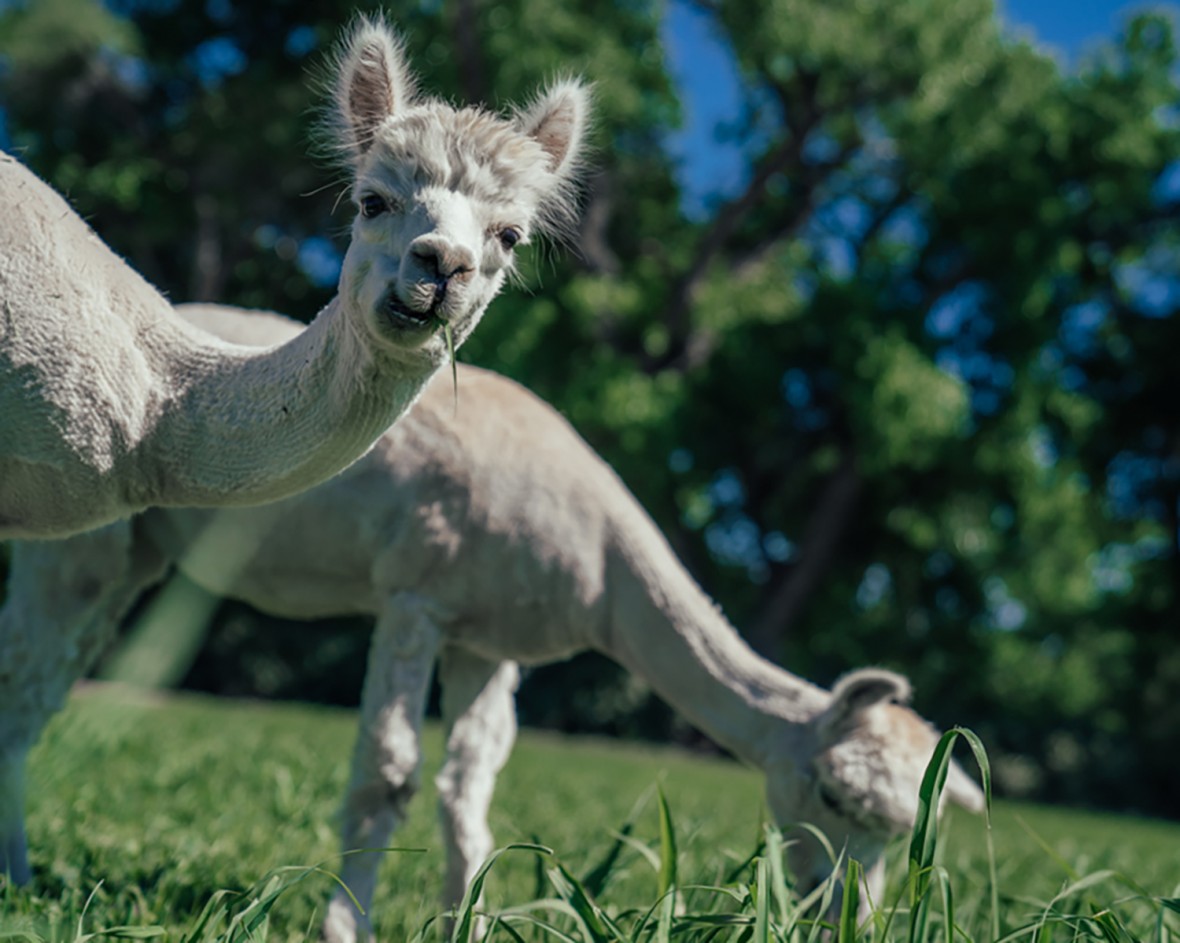
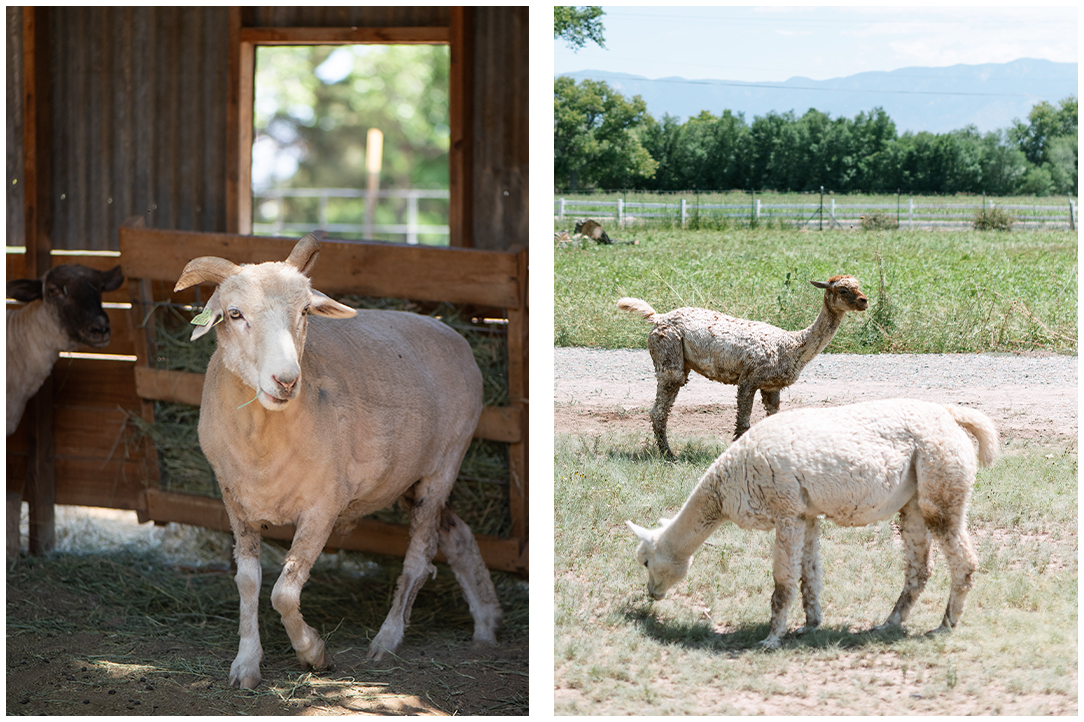
Good land stewardship sometimes means taking a step back to look at what the land is telling you. Last spring we took some time to evaluate and re-seed our animal pasture for the health of our sheep, alpacas and the soil itself.
The pasture in question was our animals' original grazing ground. In the early days, when it was the only space we had, it bore the full weight of the herd without rest. Over time, the grass thinned, the soil was exposed and eventually the pasture lost its cover entirely. We created a new pasture along the exit driveway to give the animals somewhere to graze (and greet our guests on their way out), but with only one option, that space was approaching its limits too.
The solution was rotation. By restoring the original pasture, we could move the animals between two spaces, allowing each one to recover between grazing periods. Last spring, we began the work of preparing the old pasture for reseeding. This season, we are seeing results.
We seeded the pasture with a carefully chosen mix of warm-season and cool-season grasses, selected for their nutritional value, adaptability to our climate, and suitability for grazing animals.
Warm season – green in summer
- Moxie teff grass
- Little bluestem
- Blue grama
COOL SEASON — GREEN IN SPRING & FALL
- Fawn fescue
- Orchard grass
- Ryegrass
Warm-season grasses thrive through the heat of summer, while cool-season varieties green up in spring and return again in fall. Together, they extend the grazing window as far into the year as possible and offer a diversity of nutrients that supports a more varied, balanced diet for the animals, something a monoculture simply cannot provide.
WHY ROTATION MATTERS
Rotational grazing is one of the most straightforward and effective practices in regenerative land management. When animals graze the same ground continuously without rest, the grass cannot recover. Roots weaken, bare soil is exposed, and from there the degradation compounds — wind and rain erode the surface, organic matter is lost, and the soil's ability to support life diminishes.
Healthy, living soil does something remarkable: it holds and sequesters carbon, drawing it down from the atmosphere and locking it in place. Degraded soil does the opposite, releasing carbon back into the air. On the scale of a single farm, the difference may seem small. But multiplied across the millions of farms, ranches and properties across this country, land management decisions add up to something significant.
There are more immediate reasons too. Fresh pasture grass is more nutritious than purchased hay, which can vary considerably in quality. And beyond nutrition, grazing is simply what these animals are built to do. When they have good ground to work, their bodies and minds are engaged in the way nature intended. Watching them settle into a restored pasture is a reminder of why this work matters.
Photo credits; Top: Dirt Roads Travel for Visit ABQ, Left: Doug Merriam, Right: Dana & Josh Fernandez