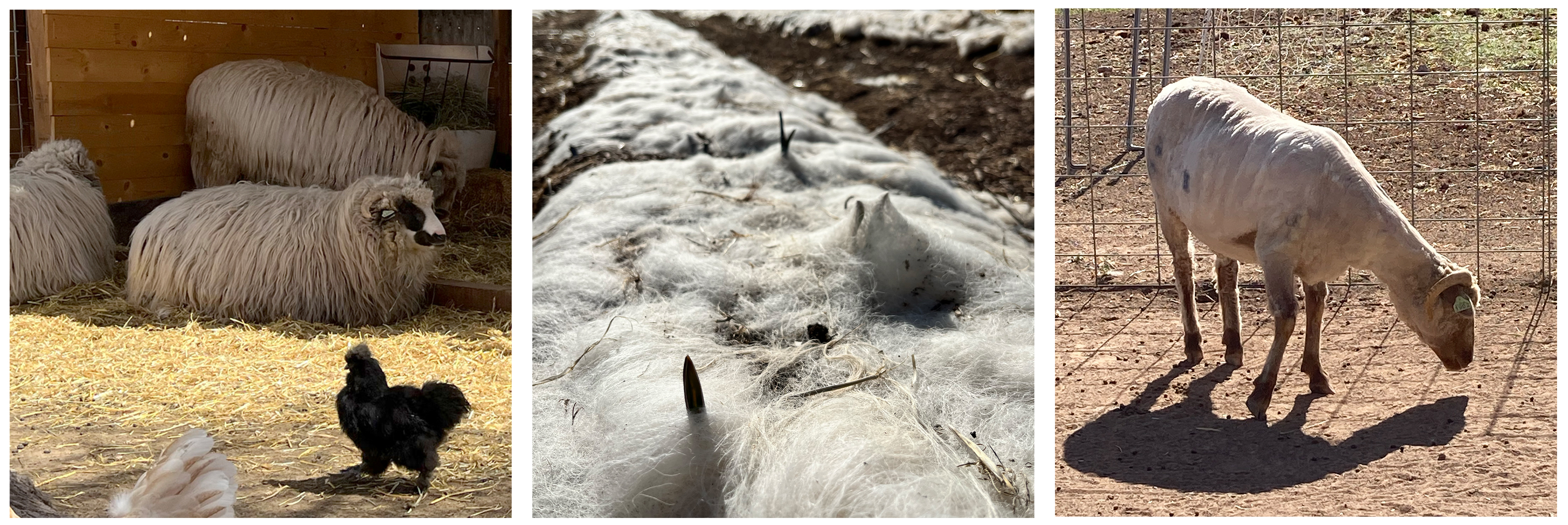
Long before Los Poblanos became known for lavender fields, gardens and hospitality, this land was a working farm shaped by the agricultural traditions of the Rio Grande Valley. In its earliest years, the property grew alfalfa, oats, corn, barley and sugar beets. At the base of the Sandia Mountains, purebred rams were raised to help New Mexico sheep herders improve the quality of their flocks — a reminder that animal caretaking has always been woven into the story of this place.
Today, that legacy continues in quieter but equally meaningful ways. Our small flock includes Churro sheep, a heritage breed first brought to New Mexico by the Spanish and deeply connected to the cultural history of the region. Their wool has served many purposes over the years. We have shared it with local artisans, and more recently experimented with using it as mulch in our garlic fields, returning what the land gives us back to the soil.
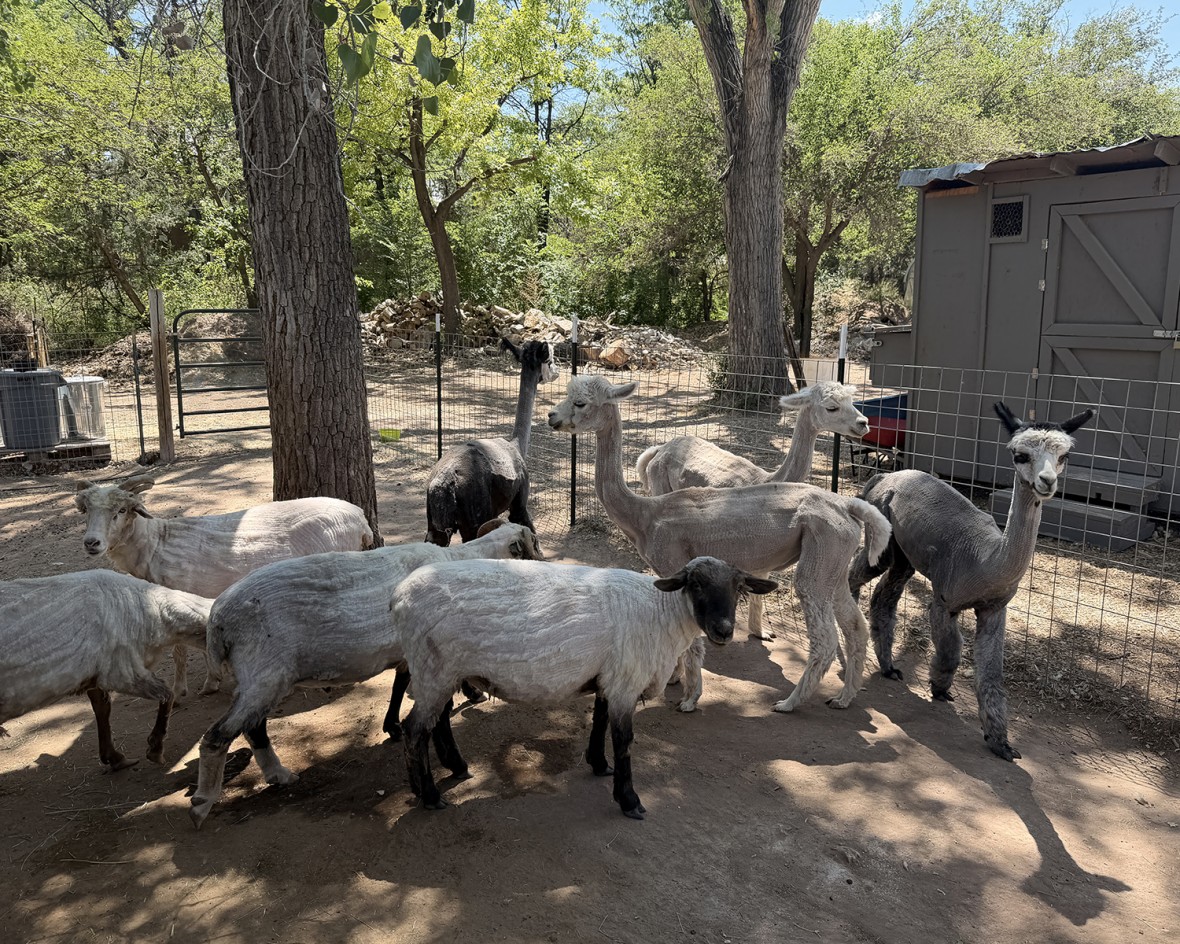
Each spring and fall, our sheep are sheared — an essential part of their care and wellbeing. This year marked a special milestone. For the first time, our Animal Caretaker, August Bervig, led the shearing after completing formal training this spring. The flock was sheared last Friday, just ahead of summer’s heat, and will be sheared again at the end of fall to keep them healthy and comfortable.
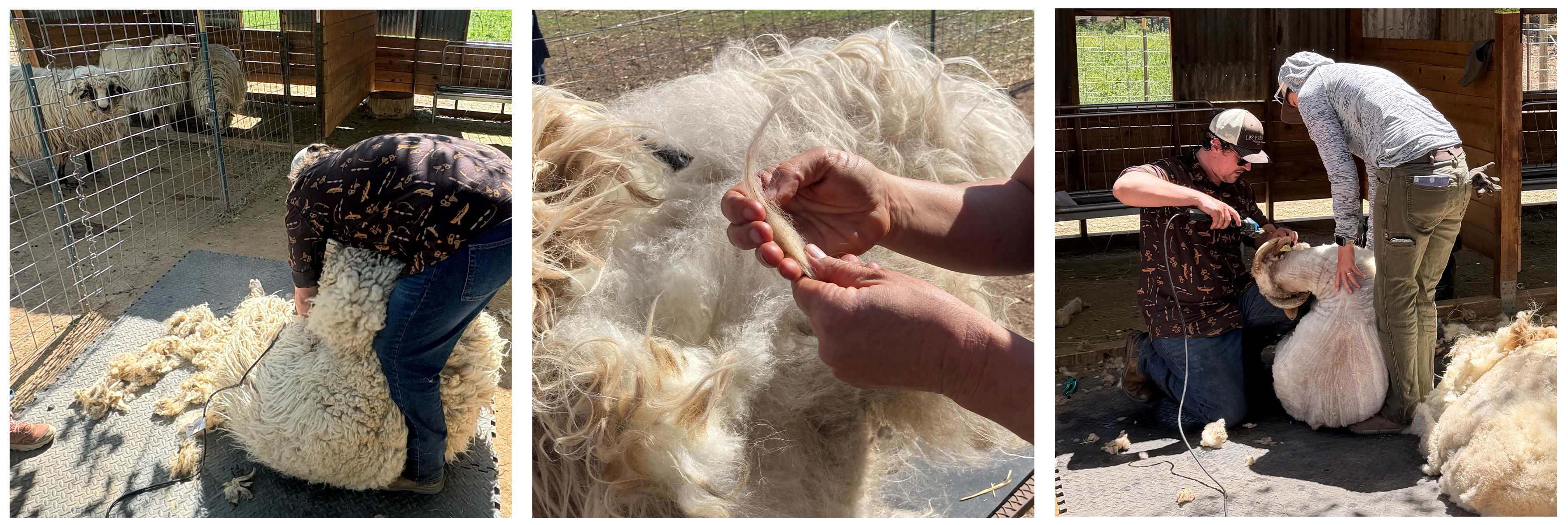
For August, learning to shear was about deepening his connection to the animals he cares for each day.
“I felt I needed to expand my ability to care for the animals at Los Poblanos,” he says. “Shearing is an important part of ensuring the health of the sheep, and learning it myself means I can do it twice a year, which is important for our flock because their wool grows so quickly.”
In April, August traveled to the University of California Hopland Research and Extension Center near Hopland for an intensive six-day course focused on sheep shearing and basic care. There, he learned not only the mechanics of shearing but the physical rhythm and intuition that come with it.
“The most challenging part is physical,” he explains. “You also have to learn each sheep’s body. Every breed — and every individual — is different. Some have folds or areas that require extra care, and your job is always to keep the sheep safe and comfortable.”
That care is what he enjoys most.
“I loved the chance to understand the sheep better — their wool, their bodies and what makes each one unique. There’s a rhythm to shearing that I really enjoy. And ultimately, it feels good to help them. Their fleece gets so heavy. Once it’s off, they seem relieved.”
This year’s shearing was especially rewarding.
“Our sheep had incredibly full, beautiful fleeces,” August says. “They were definitely overdue, which made the work more challenging, but all four produced wonderful wool. They also behaved very well, which I think comes from knowing them so well.”
As for what comes next, the wool’s future is still taking shape. Lower-quality wool from the legs and belly will likely return to the fields as mulch, while the best fleece may find a second life as something lasting and useful.
“My dream would be to turn it into blankets,” August says. “One of our sheep, Bonafacio, once produced enough wool for an entire blanket. I’d love to see that happen again.”
At Los Poblanos, caring for animals is never separate from caring for the land. It is part of a larger cycle of stewardship — honoring heritage breeds, practicing thoughtful pasture rotaion and finding beauty and purpose in every season. Sheep shearing is hard work, but it is also an act of respect: for the animals, for the craft and for the long agricultural history that continues to shape this farm today.